
Fumigation
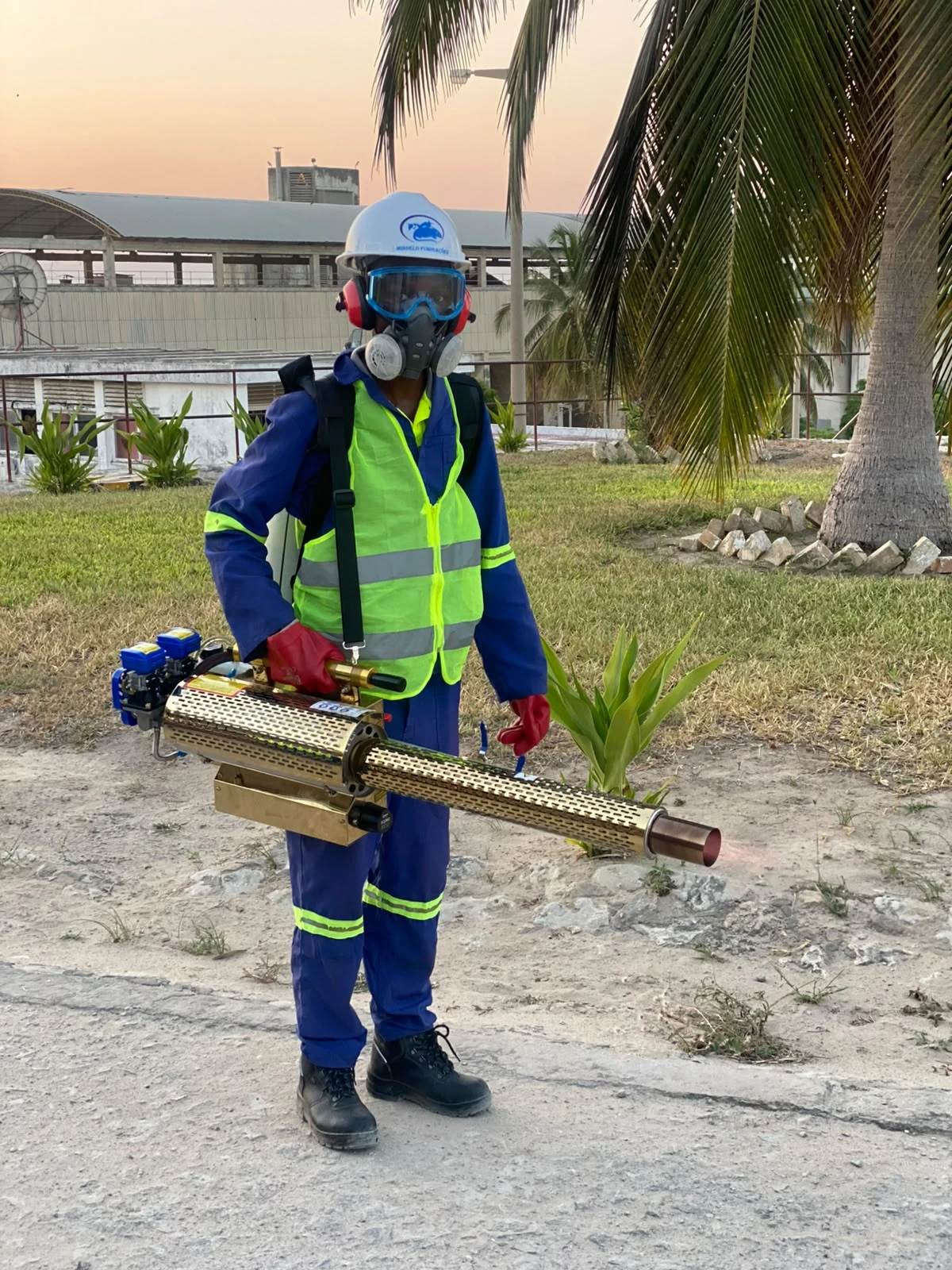
Treating large volumes in one go, by fogging. It is the method we use when the problem is not in one spot — it is in the whole space.
Two methods, chosen by the space
The difference between cold and thermal fogging is not power — it is how the droplet behaves. One settles where it is applied, the other fills the whole volume. The choice depends on what you are treating and how long the space can stay closed.
Cold fogging (ULV)
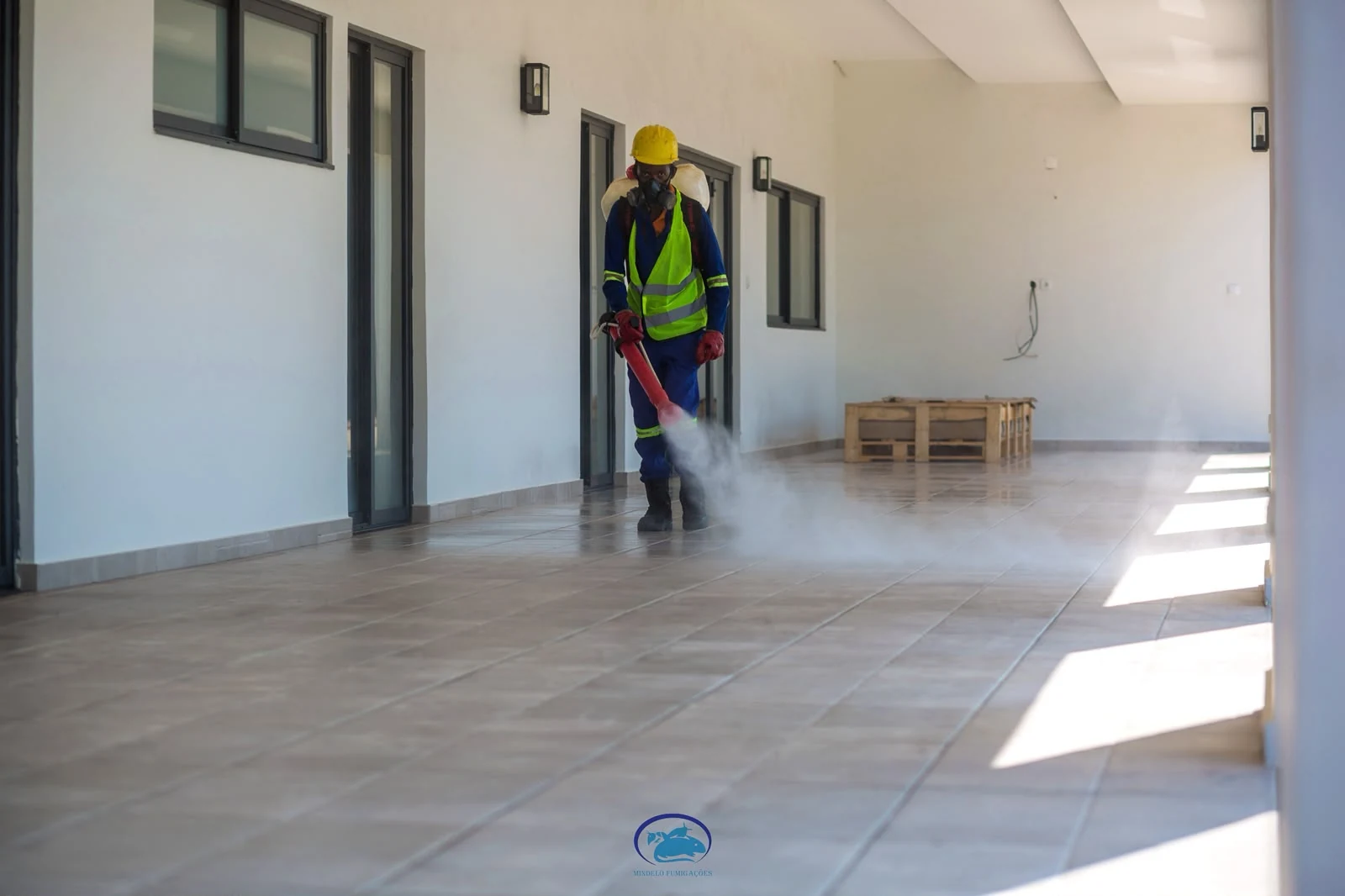
A fine droplet applied without heat, using a backpack atomiser. It settles on surfaces and keeps a residual effect. Used in furnished interiors, kitchens, bedrooms and offices, where you cannot fill the space with dense fog.
Thermal fogging
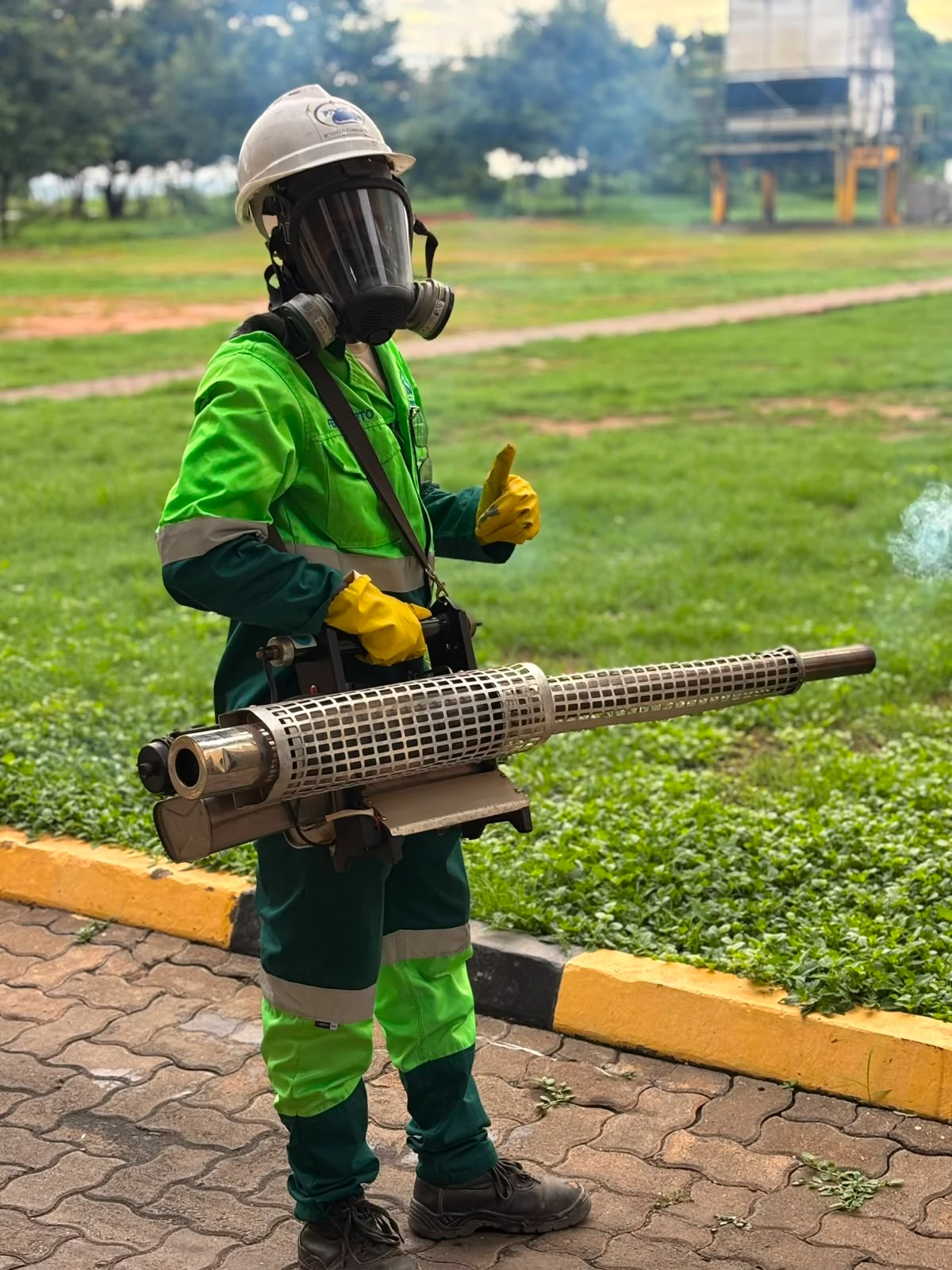
The product is vaporised hot and fills the entire volume, including gaps, false ceilings and unreachable voids. Used in warehouses, silos, containers, basements and outdoor areas with dense vegetation.
Where it applies
How to prepare the space
Preparation takes only a few minutes and makes a difference to the result. We send this list before every intervention.
Frequently asked questions
How long do I have to stay out of the space?
It depends on the product applied and how well the space ventilates. The technician gives you the exact time at the end of the application.
Intervals per product · to be confirmed with the team
Does fumigation leave a smell or mark surfaces?
A slight odour remains and clears with ventilation. On sensitive surfaces we test a discreet spot before applying.
Does one application solve the problem?
With light infestations, often yes. In established cases, the norm is a second application to catch the next cycle. That is stated in the quote, not afterwards.
Do you work outside normal hours?
Yes. In hospitality, restaurants and industry most interventions are carried out at dawn or after closing.